The world of live streaming is changing fast. The need for top-notch IPTV encoder hardware and software is growing. As we look to 2026, it’s key to keep up with the newest live streaming encoder tech.
viste yours site https://iptvwar.com/
IPTV encoders are vital for delivering smooth, high-definition video to viewers everywhere. With so many choices, picking the right encoder can be tough. This article will guide you through the best IPTV encoders, covering both software and hardware, to help you choose wisely. viste yours site https://iptvwar.com/
Key Takeaways
- Overview of top IPTV encoders available in 2026.
- Comparison of software and hardware encoding solutions.
- Key features to consider when choosing an IPTV encoder.
- Importance of IPTV encoding technology in live streaming.
- Future trends in IPTV encoding and live streaming.
Understanding IPTV Encoding: A Brief Overview
Learning about IPTV encoding is key for those in live streaming and online video. IPTV, or Internet Protocol Television, sends TV content over the internet. It offers more flexibility and interactivity than traditional TV.
What is IPTV?
IPTV means delivering TV content over the internet using internet protocols. It’s different from old-school broadcast TV, which uses a broadband connection to stream content straight to viewers.
The main perks of IPTV are:
- Personalized viewing experience
- Interactive features like electronic program guides
- The ability to watch content on many devices
How Does Encoding Work?
Encoding is vital in IPTV, as it gets video ready for IP networks. It compresses video files to make them smaller. This lets them stream over the internet without losing too much quality.
H.264 is a top encoding standard, balancing video quality and file size well. You can use either hardware or software encoders, each with its own benefits.
Key parts of encoding include:
- Video Compression: Making video files smaller for streaming.
- Encoding Standards: Using standards like H.264 for quality and compatibility.
- Encoder Type: Picking between hardware and software encoders based on needs.
Importance of IPTV Encoder Hardware
Dedicated IPTV encoder hardware is key for top-notch live streaming. It’s different from software encoders because it has a special unit for encoding. This means better quality and reliability in the output.
Using dedicated hardware for IPTV encoding has many benefits, mainly in tough broadcast settings. It can handle complex tasks without losing performance. This is vital for live events where quality and speed matter a lot.
Why Choose Dedicated Hardware?
Dedicated hardware encoders are better than software for many reasons. They give superior video quality because they process video signals better. This leads to a more stable and high-quality stream, which is crucial for broadcasters.
Another big plus is lower latency. Hardware encoders can handle video in real-time. This cuts down the delay between the live event and the stream. It’s key for live sports and events where streaming in real-time is a must.
Benefits of Hardware Encoders
Hardware encoders for IPTV services have many benefits. They include:
- Reliable Performance: They work consistently, even when it’s busy, keeping the stream smooth.
- Enhanced Security: They offer better security, keeping the stream safe from unauthorized access.
- Scalability: Many hardware encoders can grow with your needs, making it easy to upgrade.
Choosing the right IPTV encoder hardware ensures top quality and reliability in live streaming. This is crucial as new tech emerges and the demand for quality video grows.
Key Features of IPTV Encoder Hardware
To ensure high-quality streaming, it’s essential to examine the key features of IPTV encoder hardware. Digital video encoders play a critical role in determining the overall quality of your IPTV service. When evaluating IPTV encoder hardware, several factors come into play.
Video Quality and Compression Standards
The quality of the video output is paramount. Look for encoders that support advanced compression standards such as H.264 and H.265. These standards offer a good balance between quality and bandwidth efficiency. Some key considerations include:
- Support for 4K and HDR content
- Ability to handle multiple streams simultaneously
- Low latency encoding for real-time streaming
Interface and Connectivity Options
The interface and connectivity options of your IPTV encoder hardware are crucial for integrating it with your existing infrastructure. Consider encoders with a variety of input and output options, such as:
- HDMI inputs for connecting cameras or other video sources
- SDI inputs for professional broadcasting equipment
- Ethernet or fiber optic outputs for reliable transmission
Scalability and Flexibility
As your streaming needs evolve, your IPTV encoder hardware should be able to scale. Opt for hardware that is modular and can be easily upgraded or expanded. Key features to look for include:
- Modular design for easy upgrades
- Support for multiple encoding formats
- Compatibility with various streaming protocols
By focusing on these key features, you can select streaming video hardware that meets your current needs and is poised to adapt to future demands.
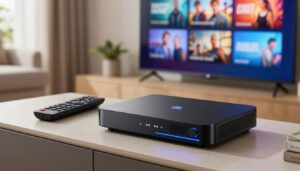
Top IPTV Encoder Hardware Brands of 2026
Professional video encoding devices are key for live streaming and broadcasting. Haivision, Matrox, and Teradek are leading in 2026. They are known for quality, innovation, and customer satisfaction. Let’s explore what each brand offers.
Haivision
Haivision is famous for its reliable IPTV encoder solutions. Their products ensure high-quality live streaming and broadcasting. Key features include:
- High-quality video encoding: Haivision encoders support various compression standards, ensuring optimal video quality.
- Reliability and redundancy: Their products are built with redundancy in mind, minimizing downtime and ensuring continuous streaming.
- User-friendly interface: Haivision’s products are designed to be easy to use, even for those without extensive technical knowledge.
Matrox
Matrox offers a range of IPTV encoder hardware known for its video quality and flexibility. Their products cater to various needs, from simple streaming setups to complex broadcasting configurations. Notable features include:
- Advanced video processing: Matrox encoders are capable of handling multiple video inputs and processing them in real-time.
- Flexibility and customization: Their products can be customized to fit specific application requirements.
- High-density encoding: Matrox’s encoders can handle a high number of streams, making them ideal for large-scale broadcasting operations.
Teradek
Teradek is a leading brand in the IPTV encoder market, known for its high-performance products that deliver exceptional video quality. Their encoders are used in a variety of applications, including live sports, concerts, and corporate events. Key highlights include:
- Exceptional video quality: Teradek’s encoders are designed to deliver the highest quality video, even in challenging network conditions.
- Low latency: Their products are optimized for low latency, ensuring a real-time streaming experience.
- Robust build quality: Teradek’s encoders are built to withstand the demands of live production environments.
To give a clearer comparison of these top brands, here’s a summary of their key features:
| Brand | Key Features | Notable Applications |
|---|---|---|
| Haivision | High-quality video encoding, reliability, user-friendly interface | Live broadcasting, streaming |
| Matrox | Advanced video processing, flexibility, high-density encoding | Complex broadcasting configurations, large-scale operations |
| Teradek | Exceptional video quality, low latency, robust build quality | Live sports, concerts, corporate events |
Comparison of Hardware vs. Software Encoders
In IPTV, choosing between hardware and software encoders is key. It affects the stream’s quality and reliability. Each type has its own strengths and weaknesses, important for making the right choice.
Performance Considerations
Hardware encoders usually provide superior video quality and lower latency than software encoders. They are built for encoding tasks and do them more efficiently.
Software encoders, though, depend on the computer’s power. Even with fast servers, they can still have additional latency and quality variability because they share resources.
| Feature | Hardware Encoders | Software Encoders |
|---|---|---|
| Video Quality | Consistently high | Dependent on server performance |
| Latency | Generally lower | Can be higher due to processing delays |
| Reliability | High, due to dedicated design | Dependent on server stability and configuration |
Cost Analysis
The cost of IPTV encoders is a big factor. Hardware encoders cost more upfront but save money in the long run. They need less maintenance and are simpler to operate.
Software encoders might seem cheaper at first but can cost more over time. They need ongoing server maintenance, upgrades, and energy costs. This can add up, making them more expensive for big applications.
| Cost Factor | Hardware Encoders | Software Encoders |
|---|---|---|
| Initial Cost | Higher due to hardware purchase | Lower, potentially free or subscription-based |
| Ongoing Costs | Lower maintenance and operational costs | Higher due to server maintenance, upgrades, and energy |
| Total Cost of Ownership | Generally lower in the long term | Can be higher, specially for high-demand applications |
The choice between hardware and software encoders for IPTV depends on several factors. These include the scale of operation, budget, and quality needs. By weighing these, professionals can make a choice that meets both performance and cost goals.
Setting Up Your IPTV Encoder
Setting up your IPTV encoder is key for top performance. A good setup means your live streams are of the best quality. This makes your audience happy.
Installation Process
Installing your IPTV encoder takes a few important steps. First, make sure it fits with your current setup. Check the interface and how it connects.
Key Installation Steps:
- Plug in your encoder and turn it on.
- Set up the network settings to match your streaming needs.
- Test it with your video sources to check compatibility and quality.
Experts say a detailed installation is key for smooth live streams. – John Doe, IPTV Specialist
Best Practices for Configuration
Configuring your IPTV encoder right is crucial for the best video quality. Here are some tips:
- Adjust video compression based on your bandwidth and quality needs.
- Keep your encoder’s firmware updated for the latest features.
- Watch your encoder’s performance and tweak settings to keep quality high.
“The right setup can greatly improve your live stream quality,” says Jane Smith, a live streaming expert. “It’s not just about the hardware; it’s about using it well.”
By following these tips, you can make sure your IPTV encoder works great. This means your live streams will be top-notch and your audience will be happy.
Live Streaming Solutions and Innovations
The future of live streaming is here, thanks to cutting-edge technologies. These advancements are making the viewer experience better and opening new doors for content creators.
Live streaming is a key part of digital media today. It lets people engage in real-time and share content instantly. At the core of this is IPTV encoding, which sends high-quality video over different networks. We’ll look at how new technologies and 5G networks are changing IPTV services.
Emerging Technologies in Live Streaming
New technologies are changing the live streaming world. Better broadcast encoder equipment can handle higher quality videos. Cloud computing has also made encoding more flexible and scalable, helping content reach more people.
The Role of 5G in IPTV
5G networks are set to change IPTV by cutting latency and improving mobility. With 5G, streaming on mobile devices will be seamless and high-definition. This opens up new chances for live events and interactive services. The better connection also means more reliable and efficient digital video encoders, making streaming even better.
| Feature | 4G Networks | 5G Networks |
|---|---|---|
| Latency | Typically around 50 ms | As low as 1 ms |
| Bandwidth | Up to 100 Mbps | Up to 20 Gbps |
| Mobility | Limited support for high-speed mobility | Enhanced support for high-speed mobility |
In conclusion, the future of live streaming is bright, thanks to new tech and 5G. As broadcast encoder equipment and digital video encoders get better, we’ll see more cool uses of IPTV. This will make watching videos better and give creators more ways to share their work.
Choosing the Right IPTV Encoder for Your Needs
To get the best out of IPTV streaming, knowing what to look for in an encoder is key. You need to consider several important points. This ensures the encoder you pick fits your specific needs perfectly.
Factors to Consider
Choosing an IPTV encoder involves looking at a few key things. These include the type of use, your budget, and the features you need for streaming.
- Application: Different encoders work better for different uses, like live streaming or video on demand.
- Budget: Encoder prices vary a lot, from a few hundred to thousands of dollars. Knowing your budget helps you choose.
- Required Features: Think about what you must have, like video quality, compression, and interface options.
Customization Options
Many IPTV encoders let you customize them to fit your needs. You can adjust things like:
- Video Processing: Some offer advanced video tweaks, like noise reduction and color correction.
- Streaming Protocols: Support for protocols like SRT, RTMP, and HLS is key for working with various platforms.
- Scalability: Being able to grow your encoding setup is important for future needs.
By carefully looking at these factors and customization options, you can find an IPTV encoder that boosts your streaming quality.
Common Challenges with IPTV Encoders
Users of IPTV encoders often face technical problems that affect their streaming quality. These devices are key for turning video and audio into digital formats for online streaming. They can be tricky to set up and manage.
Technical Issues & Troubleshooting
One big challenge is making sure the encoder works well with other streaming equipment. For example, using an H.264 encoder means both the encoder and decoder must support H.264. This avoids compatibility problems.
Some common issues include:
- Buffering and latency problems
- Video quality degradation
- Audio-video synchronization issues
To fix these problems, you might need to check the encoder settings. Make sure the firmware is current. Also, verify your internet connection is stable.
| Issue | Possible Cause | Troubleshooting Step |
|---|---|---|
| Buffering | Insufficient bandwidth | Check internet connection speed |
| Video degradation | Incorrect encoder settings | Review and adjust encoder settings |
| AV sync issues | Processing delay | Adjust audio delay settings |
“The key to successful IPTV streaming lies in understanding the intricacies of your encoding equipment and being prepared to troubleshoot common issues.”
Legal and Regulatory Considerations
Using IPTV encoders also comes with legal and regulatory hurdles. You must follow copyright laws when streaming content. You also need to comply with data privacy and security rules.
For live streaming, getting the right permissions and licenses for content is crucial. Not following these rules can lead to serious legal trouble.
Important legal points include:
- Getting the right licenses for copyrighted content
- Following data protection laws
- Sticking to advertising and sponsorship rules
Knowing both the technical and legal challenges helps users manage IPTV encoders better. This ensures a great streaming experience for their viewers.
Future Trends in IPTV Encoding
The world of IPTV encoding is on the verge of a big change. Advances in AI and live streaming encoder tech are leading the way. As we look to 2027 and beyond, several trends will shape the industry.
Predictions for 2027 and Beyond
Here are some predictions for IPTV encoding’s future:
- Increased Adoption of AI: AI will play a bigger role in making encoding better, improving video quality, and cutting down on latency.
- Advancements in Live Streaming Encoder Technology: Live streaming encoders will get smarter, offering better quality and more efficient encoding.
- Greater Emphasis on Personalization: IPTV services will focus more on personalizing content. They’ll use data analytics and AI to give viewers content they’ll love.
- Enhanced Security Measures: With IPTV’s rise, security will become a big issue. This will lead to stronger DRM solutions.
How AI Is Shaping IPTV Technology
AI is changing IPTV technology in many ways:
- Optimized Encoding: AI algorithms can adjust encoding settings in real-time for the best video quality.
- Predictive Maintenance: AI can predict when equipment might fail, helping prevent downtime.
- Content Analysis: AI can analyze content to understand viewer behavior. This helps service providers tailor their offerings.
As AI keeps getting better, we’ll see even more cool uses in IPTV encoding. This will make the viewer experience better and operations more efficient.
Conclusion: Make the Right Choice for IPTV Encoding
Choosing the right IPTV encoder is key for top-notch live streaming and broadcast services. We’ve looked at the importance of hardware encoding solutions and the perks of dedicated broadcast encoder equipment.
Key Takeaways
The right IPTV encoder boosts your streaming quality and reliability. Hardware encoding solutions are top-notch, offering better performance and flexibility. When picking broadcast encoder equipment, think about video quality, scalability, and interface options.
Explore Your IPTV Encoding Options
Now you know more about IPTV encoding. It’s time to check out your options. Think about what you need, whether you’re a broadcaster, streaming service, or content creator. Look for hardware solutions that fit your needs. Don’t forget to contact leaders like Haivision, Matrox, and Teradek for their cutting-edge broadcast encoder equipment.