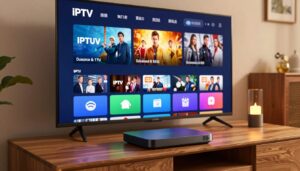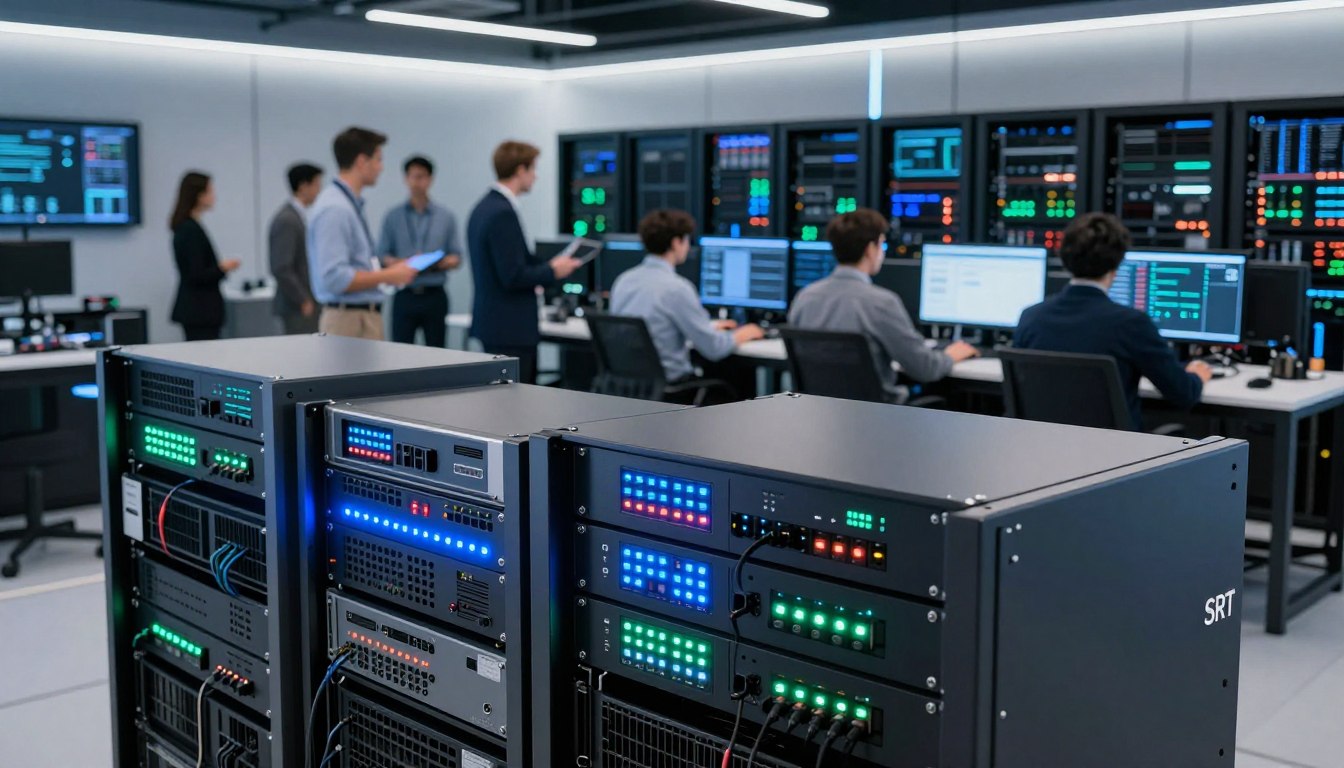
The world of digital TV is changing fast. Broadcasters want better efficiency and reliability. Now, they use a modular iptv encoder headend hevc srt for complex video tasks. This tech is key for top-notch media delivery in today’s market.
Choosing the right iptv streaming solution is now a must. It’s not just about doing the job; it’s about staying ahead. Companies need the latest tech to keep up with live production standards. They’re finding ways to improve YouTube live content delivery securely and reliably.
Efficiency and precision are what today’s broadcast is all about. With these tools, networks can get their content to viewers worldwide quickly. To stay on top in 2026, you need strong infrastructure that works for both old and new ways of sharing content.
Key Takeaways
- Modern broadcast systems require high-performance encoding to remain competitive.
- A modular architecture provides the flexibility needed for evolving media workflows.
- Secure transport protocols are vital for maintaining signal integrity during live events.
- Hardware and software integration drives the future of professional video distribution.
- Strategic technology choices enable broadcasters to reach wider audiences with lower latency.
The Evolution of Modern IPTV Infrastructure
Modern IPTV infrastructure is changing from old, fixed hardware to new, flexible software. This change lets service providers update their systems easily. They can add new features without spending a lot on new equipment.
Shifting from Legacy Hardware to Software-Defined Solutions
Old systems use special, outdated hardware. But, new software-defined architectures are flexible and always up-to-date. This makes them better for today’s digital world.
Using a complete IPTV headend software suite helps manage complex tasks better. It lets services grow fast and stay competitive. Virtualization is now a must for keeping services top-notch.
The Role of High-Efficiency Video Coding in Bandwidth Optimization
As more data is needed, finding ways to send high-quality content without using too much bandwidth is key. High-efficiency video coding helps by making video files smaller. This means you can send high-definition streams using less bandwidth.
Adding high-efficiency video coding to the encoding process makes sure bandwidth is used well. This is important for keeping quality high and costs low. Here’s a comparison of old hardware systems and new software solutions.
| Feature | Legacy Hardware | Software-Defined |
|---|---|---|
| Flexibility | Low (Fixed) | High (Scalable) |
| Updates | Hardware Replacement | Software Patching |
| Compression | Standard Codecs | High-Efficiency Video Coding |
| Deployment | Slow/Physical | Rapid/Virtual |
Core Components of a Modular IPTV Encoder Headend HEVC SRT
A modular iptv encoder headend hevc srt is key for top-notch streaming today. It uses a design that lets you add parts as needed. This keeps your system up-to-date as video tech changes.
Understanding Modular Architecture for Scalability
Modular design means you can grow your system easily. Add more parts as your viewers increase. This way, you spend only what you need, keeping quality high.
“The true power of modularity lies in the ability to adapt to changing market demands without disrupting existing services.”
Integration of SRT Protocols for Secure Video Delivery
For pro broadcasting, sending video reliably is key. Secure reliable transport ensures video gets to viewers fast, even with internet issues.
Using secure reliable transport fixes old streaming problems like jitter. It checks data as it moves, keeping quality high for viewers.
Hardware Acceleration vs. Software Encoding Performance
Choosing between hardware and software for encoding is a trade-off. Hardware is faster for 4K, but software updates easier. Here’s how they compare.
| Feature | Hardware Acceleration | Software Encoding |
|---|---|---|
| Power Consumption | Low (Optimized) | High (CPU Intensive) |
| Latency | Ultra-Low | Variable |
| Flexibility | Limited | High |
| Cost Efficiency | High (Long-term) | Low (Initial) |
The best modular iptv encoder headend hevc srt mix is a hybrid. It combines the best of both worlds for top performance and flexibility.
Benefits of HEVC for High-Definition Content Delivery
High-efficiency video coding changes how we stream high-quality content worldwide. It makes streaming services better by keeping video quality high and data use low.
It makes video frames better than old standards. This is key for smooth viewing on all devices.
Reducing Bitrate Requirements Without Sacrificing Quality
This tech compresses video files better than before. It does this by looking at motion and space more closely.
So, providers can send high-def streams using less data. This means viewers get crystal-clear images even on slow internet.
- Less bandwidth for users.
- Cheaper storage for media.
- Stable playback on mobile networks.
Compatibility with 4K and 8K Streaming Standards
Today, people want ultra-high-definition for top-notch entertainment. To support 4K and 8K, we need strong compression that doesn’t overload systems.
High-efficiency video coding makes it possible. It keeps high-res content available without needing huge upgrades.
Impact on Content Delivery Network Efficiency
A good content delivery network needs fast data flow for low latency. HEVC makes video packets smaller, so more data can travel at once.
This cuts down on network traffic. It makes the content delivery network work better. Providers save money and keep services reliable during busy times.
Implementing Secure Reliable Transport for Unstable Networks
Broadcasters today face the challenge of delivering high-quality content over the public internet. Network congestion and jitter are common issues. Secure reliable transport is key to keeping streams stable in these unpredictable environments. It ensures viewers get a consistent and professional experience, no matter the network.
Overcoming Packet Loss in Public Internet Transmission
Packet loss is a major problem for smooth video delivery, causing stuttering or signal failure. Modern headends use advanced error correction to instantly detect and recover missing data packets. This keeps the stream stable, even when the connection quality drops.
Strategies to fight packet loss include:
- Automatic Repeat Request (ARQ): Automatically requests the retransmission of lost packets.
- Adaptive Jitter Buffering: Dynamically adjusts to network timing variations.
- Forward Error Correction (FEC): Adds redundant data to reconstruct lost information without needing a retransmission.
Latency Management in Real-Time Video Encoding
Low latency is key for real-time video encoding, like in live sports or news. Engineers must balance high compression efficiency with fast delivery. By tweaking buffer settings and optimizing the encoding pipeline, providers can cut down delivery delay.
Good latency management makes viewing feel instant. This is done by reducing processing overhead in the encoder. When set up right, the system performs well without losing visual quality.
Encryption Standards for Secure Broadcast Quality Encoding
Security is a must for media organizations sending content over public networks. Broadcast quality encoding needs strong encryption to protect content from unauthorized access. AES-128 and AES-256 encryption are used to ensure end-to-end security.
These encryption methods create a secure tunnel for video data, stopping interception during transmission. By combining these security protocols with efficient compression, providers can confidently send premium content. This meets the high demands of modern digital broadcasting while following security standards.
Selecting the Right Streaming Media Server for Your Headend
Modern IPTV needs a good connection between your encoder modules and the streaming media server. This server is key for sending your videos to viewers. Choosing the right one keeps your workflow smooth and grows with your audience.
Compatibility Requirements for Modern Encoder Modules
Make sure the software works with your encoder’s codecs and protocols. A top-notch streaming media server should integrate well with your encoder. This ensures all important data, like captions and timecodes, are sent correctly.
Managing Multi-Protocol Output Streams
Today, people watch videos on many devices, from TVs to phones. Your server needs to handle this by converting one high-quality stream into many formats at once. A flexible streaming media server lets you send content to different platforms easily, without needing more hardware.
Redundancy and Failover Strategies for 24/7 Operations
For non-stop broadcasts, redundancy is a must. Look for systems with automatic failover. This means if the main server fails, the backup takes over right away. This keeps your broadcasts running smoothly, even when unexpected problems arise.
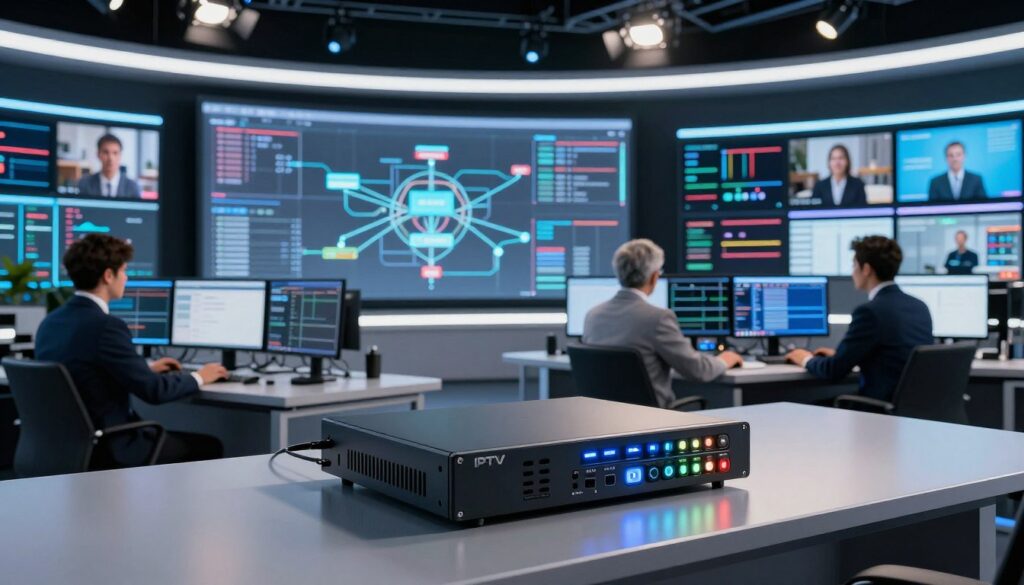
Optimizing Video Over IP Workflows for Broadcast Quality
To get professional broadcast quality, you need to understand today’s network dynamics. As we move to digital-first, broadcast quality encoding is key. Using the best IPTV providers keeps your setup strong for high demands.
Managing Synchronization Across Distributed Networks
Keeping audio and video in sync is a big challenge in video over ip. Data moving through networks can cause delays. Precision timing protocols are needed to keep everything in sync for viewers.
Engineers must use strong clock sync methods to fight jitter. This keeps the stream quality high. It’s critical for live content to look good everywhere.
Monitoring Tools for Real-Time Quality Assurance
Good real-time video encoding needs constant checking and feedback. Modern tools help engineers see how streams are doing from start to end. They spot problems like packet loss or bitrate changes fast.
Being proactive is what makes a top-notch headend. With advanced diagnostic tools, operators can find issues before they affect viewers. Real-time quality assurance makes sure every frame is up to par for professional use.
Cost-Benefit Analysis of Upgrading to HEVC-Ready Systems
Switching to HEVC-ready systems is a smart financial choice for IPTV providers looking to grow. The upfront cost for new equipment might seem high. But, the savings and better service quality make it worth it in the long run.
Long-Term Savings on Bandwidth and Storage
The main reason for this upgrade is the big drop in data use. HEVC’s advanced compression lets providers send high-def content using half the bandwidth of old standards. This drastic reduction cuts down on monthly costs for content delivery and cloud storage.
These savings add up over time. They let companies spend more on new content or improving their platforms. Lower bandwidth needs also mean they can handle more users without expensive upgrades. This flexibility is key to staying ahead in a competitive market.
“Efficiency in video compression is no longer just a technical luxury; it is the cornerstone of a sustainable and profitable streaming business model.”
Return on Investment for IPTV Service Providers
Upgrading also boosts subscriber happiness. Better video quality means less buffering and downtime, which are big reasons for people to leave. Happy viewers are more likely to stay subscribed for a long time.
The table below shows how switching to HEVC-ready systems can save money:
| Metric | Legacy H.264 System | HEVC-Ready System | Financial Impact |
|---|---|---|---|
| Bandwidth Usage | High (100%) | Low (50%) | 50% Cost Reduction |
| Storage Costs | Premium | Optimized | Significant Savings |
| Subscriber Churn | Moderate | Low | Higher Lifetime Value |
| Operational ROI | Baseline | High | Increased Profit Margin |
Choosing to upgrade is about balancing upfront costs and long-term benefits. Providers that focus on these technical upgrades can grow their market share while keeping costs down. This forward-thinking approach helps them stay strong against rising data costs.
Future-Proofing Your IPTV Streaming Solution for 2026 and Beyond
Creating a strong iptv streaming solution for 2026 and beyond needs careful planning. The industry is changing fast, and providers must keep up. They need to make sure their systems can adapt and stay efficient.
Keeping up with new technology is now a must, not just a choice. It’s essential for success in a competitive digital world.
Adapting to Emerging Video Compression Standards
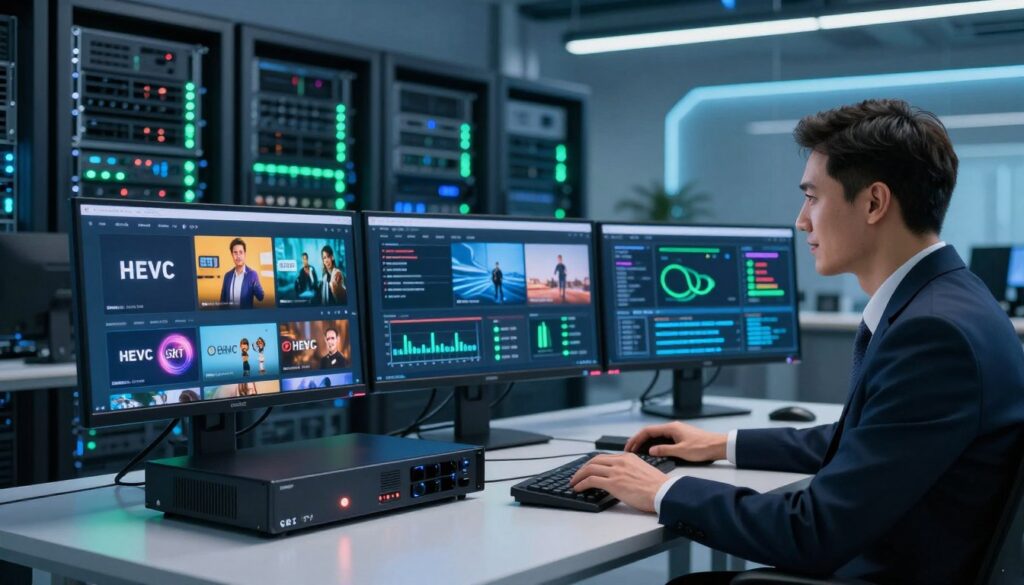
HEVC is big now, but new video codecs are coming. Engineers are working on even better standards for high-quality videos. Proactive providers should watch these changes to avoid expensive updates later.
Choosing modular hardware today lets systems update easily with new software. This makes it simple to switch to new video formats. Using flexible software, like IPTV Smarters Pro, keeps the quality high as technology changes.
The Convergence of Cloud and On-Premise Encoding
The future is in a hybrid model. It mixes the reliability of local hardware with the cloud’s growth. This mix helps manage big traffic without too much equipment. It’s a solid base for any iptv streaming solution.
Local encoding is key for live events, while the cloud handles extra traffic and global reach. This mix keeps services running smoothly, even when viewership jumps. Strategic planning here keeps your network competitive for years to come.
Conclusion
Today’s IPTV providers must keep up with viewers’ growing needs for better quality and speed. Using modern encoding systems like HEVC and SRT is key. These technologies help deliver high-definition content smoothly and efficiently.
Service providers need to focus on building flexible infrastructure. This is important to stay ahead in the market. Knowing about low-latency streaming helps choose the best tools for each broadcast. This balance ensures fast and reliable delivery, no matter the network.
Regular updates are essential to keep streaming technology up-to-date. Using advanced compression and transport protocols makes systems more resilient. This approach helps businesses stay ready for future challenges. Companies that keep their systems flexible and up-to-date will lead the video delivery market.