Have you heard of IPTV? It’s changing how we watch TV. IPTV, or Internet Protocol Television, sends TV shows over the internet.
Don’t wait! Visit my website now and get the best IPTV subscription today https://iptvwar.com/
IPTV services are different from old TV. They let you watch what you want, when you want. You get lots of channels and shows online.
Looking into IPTV, you’ll see great things. IPTV providers give you top-notch streams and easy-to-use sites. They also let you pick what you want to watch.
Key Takeaways
- IPTV delivers television programming through the internet.
- IPTV services offer a flexible and personalized viewing experience.
- IPTV providers offer high-quality streams and customizable packages.
- You can access a wide range of channels and on-demand content.
- IPTV is revolutionizing the way we watch television.
What Is IPTV and How Does It Differ from Traditional TV?
IPTV is a new way to watch TV, different from old TV methods. It uses the internet to send TV shows and movies. This is unlike traditional TV, which uses broadcast signals or cable.
Defining Internet Protocol Television
IPTV sends TV services over the internet. It lets viewers watch what they want, when they want. IPTV streaming offers live TV, movies, and more on devices.
Key Differences Between IPTV and Cable or Satellite TV
IPTV uses the internet, unlike cable or satellite TV. This means better video quality and more choices. It’s a big step up from old TV.
IPTV also lets viewers interact more. They can pause, rewind, and watch shows on demand. This makes watching TV more fun and personal.
The Technology Behind IPTV Content Delivery
IPTV uses a network of servers and devices to deliver content. It uses streaming protocols like RTSP and HLS. This ensures content reaches users smoothly.
Understanding IPTV means knowing about middleware systems. These systems manage the user interface and guides. The set-top box or device decodes the content for a good viewing experience.
How Does IPTV Work?
To understand IPTV, we need to know its technology. IPTV, or Internet Protocol Television, sends TV content over the internet. It’s different from old TV broadcast methods.
The IPTV Content Delivery Process Explained
The process has a few key steps. First, content is encoded into a digital format for streaming. This content is stored on servers by IPTV providers. When you want a channel or program, it streams to your device over the internet.
- Content encoding and compression
- Storage on IPTV servers
- Streaming to user devices
Network Requirements and Bandwidth Considerations
A fast and stable internet is key for IPTV. The bandwidth needed varies with stream quality. SD needs less bandwidth than HD or 4K. Providers suggest a minimum internet speed for smooth viewing.
The Role of Set-Top Boxes and Middleware Systems
Set-top boxes (STBs) are vital for IPTV. They decode content and show it on your TV. Middleware systems connect the STB to the content provider. They manage the user interface, content navigation, and billing.
- Decoding streamed content
- Managing user interface and navigation
- Handling billing and subscription services
Content Storage and Server Infrastructure
IPTV providers use strong server infrastructure for content storage and streaming. These servers are in data centers and handle many streams at once. The server’s power and storage decide the content range and quality.
Knowing these parts helps us see IPTV’s complexity and power. Whether you’re thinking of switching to IPTV or just want to know how it works, this info is a great start.
Three Main Types of IPTV Services
IPTV technology offers a variety of viewing experiences. It caters to different tastes and viewing habits. This makes IPTV services appealing to many.
Video on Demand (VOD) Services
Video on Demand (VOD) services let users watch content whenever they want. They have a huge library of movies, TV shows, and more.
Key Features of VOD Services:
- Access to a wide range of content
- Ability to pause, rewind, and fast-forward content
- Personalized recommendations based on viewing history
Time-Shifted Media and Catch-Up TV
Time-shifted media and catch-up TV let users watch shows they missed later. It’s great for catching up on favorite shows or events.
Benefits of Time-Shifted Media:
- Watch missed TV shows and events
- Flexibility to view content at a convenient time
- No need to adhere to a traditional broadcast schedule
Live Television Streaming
Live television streaming through IPTV lets users watch TV channels in real-time. It’s like traditional TV but over the internet, offering more flexibility and quality.
| Type of IPTV Service | Description | Key Benefits |
|---|---|---|
| Video on Demand (VOD) | Access to a library of content for on-demand viewing | Flexibility, personalized recommendations |
| Time-Shifted Media and Catch-Up TV | Watch previously aired content at a later time | Flexibility, ability to catch up on missed shows |
| Live Television Streaming | Real-time TV channel streaming over the internet | Flexibility, potentially better quality, real-time viewing |
Exploring IPTV streaming options reveals three main types of services. They meet different needs and preferences. Whether you want on-demand content, catch-up shows, or live TV, IPTV has it all.
IPTV Protocols and Streaming Technologies
Learning about IPTV’s protocols and technologies is key to understanding how it works. As you dive into IPTV streaming, you’ll see it’s based on advanced tech for top-notch video delivery.
Understanding Multicast vs Unicast Streaming
In IPTV streaming, there are two main ways to send content: multicast and unicast. Multicast streaming sends one stream to many viewers at once, perfect for live events. Unicast streaming gives each viewer their own stream, great for on-demand content.
“Multicast streaming is great for live TV and events with lots of viewers,” says an expert. It saves bandwidth and makes watching smoother.
Common IPTV Protocols: RTSP, RTMP, and HLS
Several protocols are key in IPTV streaming. RTSP (Real-Time Streaming Protocol) manages streaming media servers. RTMP (Real-Time Messaging Protocol) is known for its fast streaming. HLS (HTTP Live Streaming), by Apple, adjusts to network changes for a smooth watch.
- RTSP: Best for on-demand content and controlling playback.
- RTMP: Great for live streaming because it’s fast.
- HLS: Changes bitrate to match network conditions for a better watch.
Video Compression Standards: H.264 and H.265
Video compression is vital in IPTV streaming. It makes high-quality video use less bandwidth. H.264 is common and balances quality with file size well. H.265 (HEVC) is newer and compresses even better, making 4K and HD content possible.
“H.265 has changed the game for IPTV, letting services offer high-quality content at lower costs,” says a top IPTV provider.
As you learn more about IPTV streaming, knowing these protocols and technologies will deepen your understanding of the complexity and innovation in delivering your favorite shows.
Popular IPTV Providers and Services in the United States
The United States has many IPTV providers for different tastes. They offer various channels, on-demand shows, and special features. These services are great for both those cutting the cord and traditional TV fans.
Best IPTV Streaming Services for Cord-Cutters
Cord-cutters have many IPTV streaming services to pick from. Each has its own channel lineup and features. Here are some top choices:
- YouTube TV: It’s known for its wide channel selection and easy-to-use interface.
- Hulu + Live TV: It combines live TV with Hulu’s on-demand content.
- Sling TV: It lets you choose your channels and is affordable.
- FuboTV: It’s great for sports fans, with lots of sports channels.
- Philo: It focuses on entertainment channels and is budget-friendly for non-premium content lovers.
Telecommunications Provider IPTV Options
Many U.S. telecom providers also offer IPTV services. These include:
- AT&T U-verse TV: It has various channel packages and features like DVR.
- Verizon Fios TV: It offers high-definition channels and a strong DVR system.
When picking an IPTV provider, think about channels, cost, and extra features. Look for DVR capabilities and how many devices can stream at once.
Equipment and Requirements for IPTV Streaming
To enjoy IPTV streaming, you need the right equipment and a good internet connection. IPTV uses the internet to send high-quality video to your devices.
Internet Connection Speed Requirements
A fast and stable internet connection is key for IPTV streaming. The speed needed depends on the video quality:
- SD (Standard Definition): 3 Mbps
- HD (High Definition): 5-10 Mbps
- Full HD: 10-15 Mbps
- 4K (Ultra High Definition): 25 Mbps or more
Make sure your internet plan meets these speeds for smooth viewing.
IPTV Set-Top Boxes and Streaming Devices
You’ll need a device to play IPTV content. Here are some popular choices:
Apple TV
Apple TV works well with Apple products and offers great streaming quality.
Roku Devices
Roku supports many IPTV apps, making it a favorite among cord-cutters.
Amazon Fire TV
Amazon Fire TV gives a strong streaming experience with lots of IPTV apps and Alexa.
Android TV Boxes
Android TV boxes are flexible and let you install many IPTV apps.
Compatible Devices: Smart TVs, Smartphones, and Tablets
Many devices work with IPTV streaming, including:
- Smart TVs with IPTV apps
- Smartphones and tablets on iOS or Android
- Laptops and desktops
Check if your device works with your IPTV service.
Router and Network Equipment Optimization
Improving your home network is important for IPTV streaming. Consider:
- Using Ethernet for a stable connection
- Upgrading your router for better Wi-Fi
- Setting QoS to prioritize IPTV traffic
Optimizing your network can reduce buffering and improve video quality.
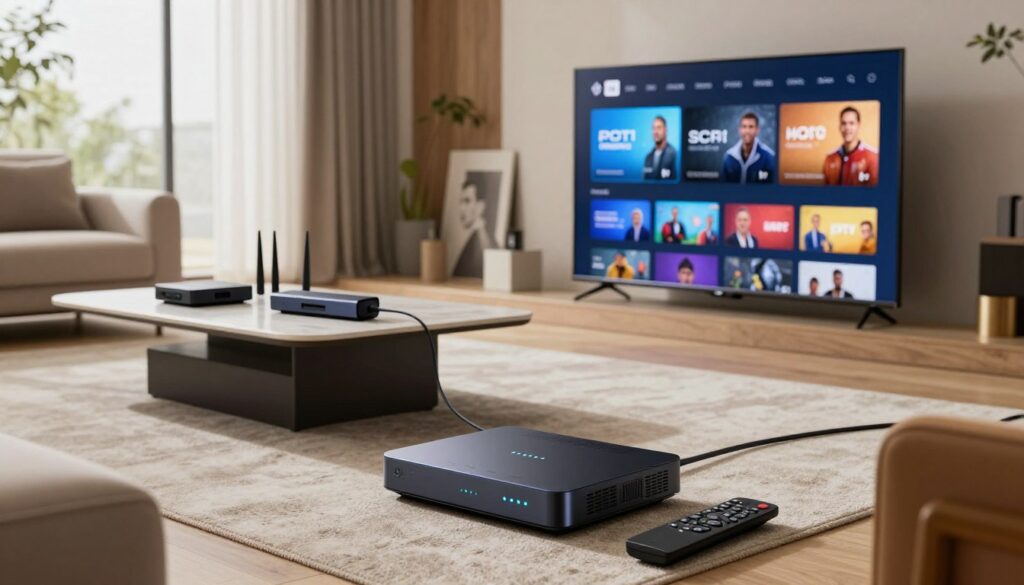
A leading expert says, “A well-configured home network is key for smooth IPTV streaming.”
“The future of television is not just about watching content, it’s about experiencing it in a way that’s personalized and seamless.”
IPTV Channels: Understanding Content Availability
IPTV gives you access to a wide range of channels and content. It’s more than traditional TV. You get a personalized and flexible viewing experience.
Live TV Channel Lineups and Packages
IPTV providers offer many live TV channel packages. These packages include local, national, and specialty channels. You can pick from basic to premium bundles.
| Package | Channels Included | Price |
|---|---|---|
| Basic | Local channels, national networks | $20/month |
| Premium | Basic channels + sports, movie channels | $50/month |
| Elite | Premium channels + international content | $80/month |
Premium Cable Channels and Sports Networks
IPTV offers premium cable channels and sports networks. You can watch HBO, Showtime, and ESPN. Sports fans and movie lovers will find plenty to enjoy.
International Channels and Specialized Content
IPTV has a wide range of international channels and content. It covers news, sports, and cultural programming. You can watch channels from all over the world.
On-Demand Libraries and Movie Collections
IPTV also has large on-demand libraries and movie collections. You can watch your favorite shows and movies anytime. Providers offer new and classic films for everyone.
Understanding IPTV content helps you enjoy a more personalized experience. It’s a flexible way to watch entertainment.
Setting Up Your IPTV Service Successfully
To enjoy IPTV, start with the right setup. This means choosing the best IPTV provider and optimizing your network for top performance.
Choosing the Right IPTV Provider for Your Viewing Habits
Finding the right IPTV provider is key. Think about what you like to watch. Do you love sports or movies and TV shows? Pick a provider that has what you want.
Also, check if the provider is reliable and has good customer service. High-definition (HD) or 4K streaming is great if your internet can handle it. Some providers offer extra features like catch-up TV and video on demand (VOD).
Step-by-Step Installation and Configuration
After picking your IPTV provider, it’s time to set it up. You can use smart TVs, smartphones, tablets, or special IPTV boxes.
- Download and install the IPTV app on your device.
- Log in with your account details from the IPTV service.
- Customize your IPTV service as you like, like setting up favorite channels.
Optimizing Your Home Network for Seamless IPTV Performance
A fast and stable internet is essential for smooth IPTV streaming. Here’s how to improve your network:
- Put your router in the middle of your home to avoid signal loss.
- Use Ethernet for devices that can, as it’s more reliable than Wi-Fi.
- Keep your router’s firmware up to date for better performance and security.
Troubleshooting Common IPTV Streaming Issues
Even with a good setup, you might face problems like buffering or poor video quality. Here are some fixes:
- Make sure your internet speed is good enough for IPTV streaming.
- Try restarting your router or IPTV device for connectivity issues.
- If problems keep happening, reach out to your IPTV provider’s support.
By following these steps and tips, you can enjoy a great IPTV experience that fits your viewing habits.
Key Advantages of IPTV Over Traditional Broadcasting
IPTV offers many benefits, like saving money and interactive features. It gives you a more personal and flexible way to watch TV compared to traditional methods.
Cost Savings and Flexible Subscription Packages
IPTV can help you save money. It’s different from cable or satellite TV because you can pick your own package. This lets you watch what you want without spending too much.
- Choose from a variety of channel lineups and on-demand content
- Customize your subscription to include only the channels you watch
- Benefit from competitive pricing without sacrificing quality
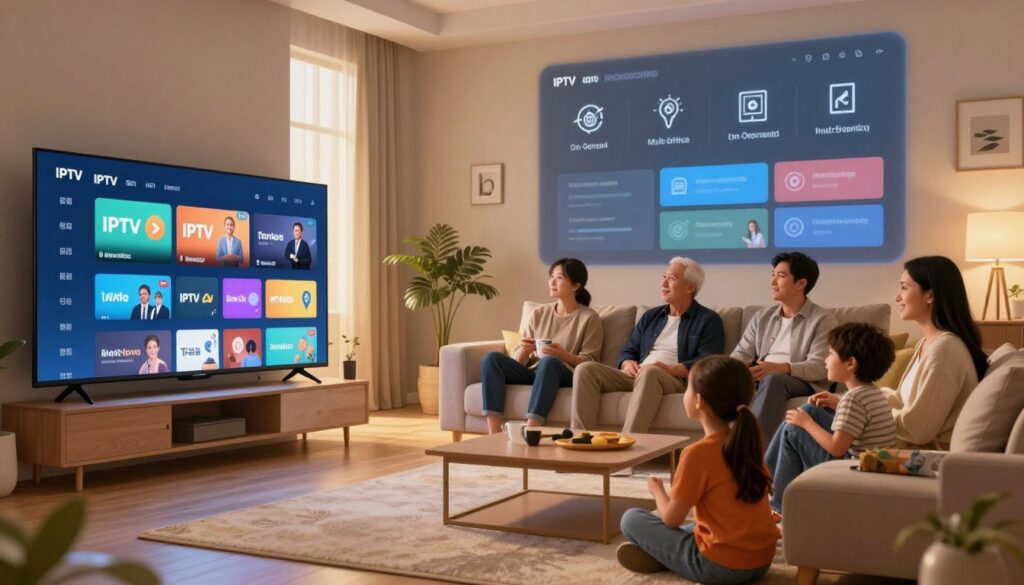
Multi-Device Streaming and Mobility
IPTV lets you watch your favorite shows on many devices. This makes watching TV better, whether you’re at home or out and about. You can use:
- Smart TVs for a traditional viewing experience
- Smartphones and tablets for mobility
- Streaming devices for expanded compatibility
Interactive Features and Content Personalization
IPTV has cool features that make watching TV better. You can get:
- Electronic program guides (EPGs) for easy navigation
- Personalized recommendations based on your viewing habits
- Interactive TV features, such as voting or participation in live events
No Equipment Rental Fees or Long-Term Contracts
IPTV means no extra fees for equipment. Plus, you can choose flexible plans without being locked into a long contract. This gives you the freedom to change or cancel when you want.
Knowing these benefits can help you decide if IPTV is right for you.
Potential Drawbacks and Limitations of IPTV
IPTV has many benefits, but it also has some downsides. Knowing these can help you decide if IPTV is right for you.
Internet Dependency and High Bandwidth Requirements
IPTV needs a strong and stable internet connection. Unlike traditional TV, it streams content from the internet. So, your internet service provider’s quality affects your viewing.
Also, IPTV requires a lot of bandwidth. For example, standard definition needs 3 Mbps, high-definition 5-10 Mbps, and 4K 25 Mbps or more. If your internet isn’t strong enough, you might see buffering or poor video quality.
Service Reliability and Buffering Concerns
Service reliability is key for IPTV. Any internet problem can ruin your TV watching. Issues like server overload or network congestion can cause buffering or outages.
To solve these, many IPTV providers use strong servers and CDNs. But, the quality of these systems can differ, affecting service reliability.
Geographic Restrictions and Blackout Rules
IPTV services often face restrictions and blackout rules, mainly for live sports and TV shows. These are due to licensing agreements that limit content to certain areas.
For example, some sports events might not be available in your area. This can be a problem for IPTV users who want to watch content available elsewhere.
Learning Curve and Technical Challenges
IPTV can be tricky for those not tech-savvy. Setting it up requires configuring devices and understanding networking basics.
Fixing common issues like buffering or poor video quality can also be hard. You’ll need some knowledge of networking and device setup to enjoy IPTV fully.
In summary, IPTV has many benefits but also some drawbacks. Knowing these can help you decide if IPTV is right for your entertainment needs.
Legal Considerations When Choosing IPTV Services
IPTV is getting more popular, and picking a legal service is key. There are many providers out there. It’s important to know the difference between legal and illegal services for a good viewing experience.
Legitimate IPTV Services vs Illegal Streaming Operations
Legal IPTV services have the right licenses and follow copyright laws. They offer quality streams. On the other hand, illegal services risk legal trouble and malware for users.
Legitimate IPTV services have:
- Clear licensing agreements
- Quality video streams
- Good customer support
- Regular updates
Copyright Laws and Digital Piracy Concerns
Copyright laws protect creators’ work. Using unauthorized IPTV services breaks these laws and can lead to big penalties.
Remember:
- Piracy hurts creators’ income
- Illegal streams can have malware
- Law enforcement is cracking down on piracy
How to Identify and Verify Legal IPTV Providers
To find a legal IPTV service, look for these signs:
- Official licenses and partnerships
- Good customer reviews
- A professional website
- Clear contact info and support
Legal IPTV providers are open about what they offer and follow the law.
Risks and Consequences of Using Unauthorized IPTV Services
Using unauthorized IPTV services can cause:
- Legal trouble
- Malware risks
- Poor streaming quality
- Data loss
Always choose reputable IPTV providers to avoid these risks.
When picking an IPTV service, do your homework. Look for the best IPTV with many channels, reliable streams, and great support. Choosing a legal provider means a safe and fun viewing experience.
IPTV Streaming for Major Events: FIFA World Cup 2026 and Beyond
The FIFA World Cup 2026 is coming, and IPTV streaming will change how we watch sports. Fans worldwide are excited, and IPTV promises a top-notch viewing experience.
IPTV Services Broadcasting FIFA World Cup 2026
Many IPTV services will show the FIFA World Cup 2026. They’ll offer live matches, analysis, and commentary. So, you won’t miss any of the action.
Key IPTV providers are making big promises. They’ll have sports channels and on-demand content. You can watch live or catch up later, all on your IPTV platform.
Advantages of Watching Major Sporting Events Through IPTV
Watching sports on IPTV has many benefits. It’s flexible and convenient. You can watch on smart TVs, smartphones, or tablets.
- Multi-device support for seamless viewing
- High-quality streaming with options for 4K resolution
- Interactive features for an enhanced viewing experience
Multi-Screen Viewing and Social Watching Features
IPTV is great for watching on multiple screens. During the FIFA World Cup 2026, you can watch many matches at once. This way, you’ll never miss a moment.
IPTV also has social watching features. You can watch with friends and family, even if you’re not in the same place. It makes watching sports more fun and interactive.
4K and Enhanced Streaming Quality for Live Sports
The FIFA World Cup 2026 will be in 4K resolution on some IPTV services. This means you’ll get a super-clear picture and amazing sound. It’s like having the game right in your living room.
With IPTV and 4K streaming, watching live sports is going to be even better. It promises a thrilling experience for sports fans everywhere.
Conclusion: Is IPTV the Right Choice for Your Entertainment Needs?
Exploring Internet Protocol Television (IPTV) has shown you its good and bad sides. IPTV lets you watch live TV, movies on demand, and channels from around the world. It’s all about flexibility and personal choice.
Thinking about what is iptv and if it’s for you? Consider your viewing habits. If you like streaming on different devices, enjoy interactive features, and save money, IPTV could be perfect.
Before deciding, check out the iptv services and iptv providers in your area. Look for ones with lots of channels, reliable streaming, and easy-to-use interfaces. Think about your internet speed, compatible devices, and customer support too.
In the end, IPTV is a modern, flexible choice compared to traditional TV. By looking at the pros and cons, you can see if IPTV fits your entertainment needs.