Best IPTV vs cable is one of the most searched comparisons in 2026. Many users are switching from traditional cable TV to IPTV because of lower prices, more channels, and flexible streaming. But is IPTV really better than cable?
In this guide, we compare IPTV vs cable TV in terms of price, quality, channels, and overall value—so you can choose the best option for your needs.
It’s important to know the main differences between these TV services. Whether you love live sports, shows from other countries, or movies on demand, your choice depends on what you need and how much you want to spend. Many people look at IPTV reviews 2026 to see which service is better for watching TV.
Key Takeaways
- Digital streaming services provide greater flexibility than traditional broadcast methods.
- Consumers must evaluate their internet bandwidth to ensure high-quality 4K playback.
- Pricing structures vary significantly between monthly subscriptions and long-term contracts.
- Hardware requirements differ, ranging from smart TV apps to dedicated streaming boxes.
- Legal and licensing considerations remain a vital factor for US-based viewers.
Understanding the Evolution of Television Delivery
How we watch TV has changed a lot. For years, TV was stuck in old ways. Now, digital TV has changed how we enjoy our favorite shows.
The Shift from Traditional Coaxial Cable
Old TV used wires to bring shows to homes. This setup needed a pro to install and tied you to a long contract. It worked well for years but wasn’t flexible for today’s fast pace.
Many people got tired of these old systems. They were upset about:
- High monthly costs for channels they didn’t watch.
- Inflexible hardware that kept you in one place.
- Not being able to pause, record, or watch on different devices.
The Rise of Internet Protocol Television
Internet Protocol Television (IPTV) changed the game. It uses fast internet to send shows to smart devices. This lets you watch what you want, when you want. That’s why people look for the best iptv services to match their lifestyle.
This move to digital TV has opened up new options. Now, you can watch live TV, catch up on shows, and record them in the cloud. This change is here to stay, making TV more flexible and personal.
Analyzing the Best IPTV vs Cable Performance Metrics
When it comes to watching TV, how data gets to your screen matters. Cable uses special lines, while IPTV relies on your home network. Knowing this helps pick the best IPTV vs cable for you.
Latency and Buffering in Live Broadcasts
Latency is a big deal for sports fans. Cable usually has less delay because it’s a closed system. But, streaming tv options might have a bit more delay because of internet travel time.
“The shift toward digital delivery has revolutionized how we consume media, yet the laws of network physics are the same.”
Buffering happens when your device can’t get data fast enough. This is often due to network issues or slow internet. To avoid this, consider these tips:
- Network Stability: Wired Ethernet is more reliable than Wi-Fi.
- ISP Quality: Fast fiber connections help avoid buffering.
- Device Processing: New streaming devices handle data better.
Bandwidth Requirements for High-Definition Streaming
HD content needs a steady data flow for clear pictures. If your bandwidth is too low, your service might lower the quality to prevent freezing. Here’s what you need for a smooth experience.
| Resolution | Minimum Speed | Recommended Speed |
|---|---|---|
| Standard Definition | 3 Mbps | 5 Mbps |
| High Definition (1080p) | 8 Mbps | 15 Mbps |
| Ultra HD (4K) | 25 Mbps | 50 Mbps |
When comparing best IPTV vs cable, remember your internet is shared. If others are using bandwidth, your streaming tv options might slow down. Make sure your internet plan is big enough for your viewing needs.
Comparing Pricing Structures and Hidden Costs
When looking at the best IPTV vs cable, the real differences are often hidden. The prices might seem good at first, but the total cost is different. This is true for both IPTV and cable.
It’s key to understand the cost differences between old cable and new streaming services. When comparing cable vs iptv pricing, we need to look closely at how each service charges. This includes monthly fees and service agreements.
Monthly Subscription Fees and Contractual Obligations
Old cable services often use long-term contracts to keep customers. These deals start with low prices but then go up a lot after a year. On the other hand, many new services offer monthly plans that you can change or cancel easily.
“The shift toward subscription-based models has empowered consumers to demand greater transparency and flexibility in their monthly entertainment expenditures.”
Equipment Rental Fees and Installation Charges
Another big difference is the cost of equipment. Cable companies charge for renting boxes, DVRs, and modems. This can make your yearly bill much higher. Plus, you might have to pay extra for professional installation.
IPTV services usually don’t need special equipment. You can use your own devices like smart TVs or streaming sticks. This makes IPTV a better choice for saving money.
| Cost Category | Traditional Cable | Modern IPTV |
|---|---|---|
| Monthly Base Fee | High (with hidden surcharges) | Low to Moderate |
| Equipment Rental | Required ($10-$20/mo) | Optional/None |
| Installation | Professional Fee Required | Self-Install (Free) |
| Contract Term | 12-24 Months | Month-to-Month |
Content Variety and Channel Lineup Availability
The fight between cable tv alternatives and traditional cable is often about the channels you need. Legacy providers bundle everything together, while new streaming services offer a more flexible approach. Knowing these differences helps families decide how to spend their monthly entertainment budget.
Local Channel Access and Regional Sports Networks
Getting local broadcast stations and regional sports networks (RSNs) is hard for many who cut the cord. Traditional cable providers usually include these channels in their basic packages. On the other hand, iptv vs traditional cable shows that streaming services might not have all the local sports you want because of licensing issues.
Some streaming platforms do offer local affiliates, but it depends on your zip code. If you love live sports, check if your streaming service has the RSNs you want. This choice often decides whether you stay with traditional cable or switch to digital.
On-Demand Libraries and Premium Add-on Packages
The size of on-demand libraries is a big difference maker. Streaming services have huge collections of movies and original shows available anytime. This on-demand flexibility lets you watch what you want, when you want, unlike traditional TV.
Premium add-on packages let you customize even more. You can add or remove services like HBO or sports packages easily. This flexibility is hard to find in traditional long-term contracts, making cable tv alternatives very appealing for those who love variety.
| Feature | Traditional Cable | Modern IPTV |
|---|---|---|
| Channel Customization | Limited (Bundled) | High (Modular) |
| Regional Sports | Standard Inclusion | Varies by Provider |
| On-Demand Depth | Moderate | Extensive |
| Contract Flexibility | Low (Annual) | High (Monthly) |
Evaluating User Experience and Interface Design
How you interact with your TV service is key to a great home entertainment experience. Today’s platforms focus on intuitive design to make finding your favorite shows easy. A good interface makes complex tech simple and fun for everyday use.
Navigation and Electronic Program Guide Functionality
Navigation systems have changed a lot from the old days. Now, we have dynamic Electronic Program Guides (EPGs) with search, genre filters, and personal recs. These features help users explore lots of content without getting lost in choices.
A good interface means scrolling through channels is quick. Guides that work well give instant access to live and recorded shows. This shows that service providers care about saving your time.
Multi-Device Compatibility and Remote Viewing
Today, we want to watch shows anywhere, not just at home. Multi-device compatibility lets you switch easily from TV to tablet or phone. This is great for families with different viewing habits.
Remote viewing lets you manage DVR or start streams from anywhere. This makes your TV service follow you, creating a unified ecosystem. Here’s how different services handle these key features.
| Feature | Traditional Cable | Modern IPTV |
|---|---|---|
| Interface Speed | Moderate | High |
| Search Capability | Basic | Advanced/AI-Driven |
| Device Support | Limited | Extensive |
| Remote Management | Rare | Standard |
Reliability and Service Uptime Comparisons
When looking at iptv vs traditional cable, the connection’s stability is key. Both systems aim to give you top-notch content. But, they use different ways to get that content to you.
Knowing how these systems handle stress is important. For more info, check out best-tv-iptv-2026. It helps you understand the tech differences.
The Impact of Network Congestion on IPTV
IPTV uses your internet to stream content live. But, during busy times, like evenings, it can slow down. You might see buffering or lower video quality.
“The true test of a streaming service is not how it performs on a quiet Tuesday morning, but how it holds up when the entire neighborhood is online at once.”
Heavy traffic can cause delays. If you want smooth streaming, make sure your internet can handle many streams at once.
Weather-Related Outages in Cable Infrastructure
Traditional cable uses physical lines that weather can damage. Storms, strong winds, or ice can knock out service for many.
Digital streaming can find new paths if one is blocked. But, a cable break needs a repair person. This makes iptv vs traditional cable important for those in harsh weather areas. While streaming is flexible, some value the reliability of a physical line.
Top IPTV Services for Modern Viewers
Today, viewers have many options, making it key to compare iptv services wisely. These digital platforms offer flexibility and support for multiple devices. They fit well with today’s fast-paced life.
YouTube TV Features and Limitations
YouTube TV is known for its easy-to-use interface and unlimited cloud DVR storage. It offers a wide range of streaming tv options. This appeals to families who want a cable-like experience without the hassle.
“The simplicity of the interface combined with the reliability of Google’s infrastructure makes it a top contender for cord-cutters.”
But, it’s important to note that YouTube TV sometimes loses regional sports networks. This is due to carriage disputes. It’s a premium choice but lacks some niche international channels found in other best iptv providers.
Hulu + Live TV Integration Benefits
Hulu + Live TV is special because it combines live TV with a huge on-demand library. This lets users watch original series, movies, and live news all in one place.
- Seamless transition between live TV and on-demand content.
- Access to the entire Disney+ and ESPN+ bundle.
- Customizable profiles for every family member.
This service is great for those who want variety, not just sports. It’s a perfect mix of traditional TV and modern streaming.
FuboTV for Sports Enthuasiasts
FuboTV is the top choice for sports fans. It has more channels for live games than any other service. This includes international soccer, professional leagues, and regional sports networks.
It’s pricier than some, but it’s worth it for sports lovers. FuboTV ensures you never miss a key game moment. It offers high-definition streams for the fastest sports action.
Traditional Cable Providers in the Modern Era
Choosing a traditional cable provider in 2026 comes with its own set of benefits. These differ a lot from what best iptv providers offer. Even though digital-only platforms are very popular, old companies are not giving up. They are combining fast internet with traditional TV to keep their place in the market.
Comcast Xfinity Service Offerings
Comcast Xfinity has changed its game with the X1 platform. It mixes live TV channels with streaming apps. This way, users can find content from both TV and internet in one place. It’s great for those who want reliable cable and access to streaming services.
Xfinity bundles internet with TV to keep customers. This can make monthly bills cheaper than many streaming services. For many, this all-in-one convenience is why they choose traditional providers over IPTV.
Charter Spectrum Reliability and Bundles
Charter Spectrum puts a big focus on network stability. Their bundles aim for a consistent viewing experience. This is important for families who want to watch live sports and local news without interruptions.
Spectrum also lets users choose flexible contracts. This means you can avoid long-term deals and get good prices. By mixing fast internet with lots of channels, they stay competitive in the entertainment market. Here’s how these services compare to modern ones.
| Feature | Traditional Cable | Modern IPTV |
|---|---|---|
| Connection Type | Dedicated Coaxial | Public Internet |
| Service Stability | High Reliability | Variable |
| Bundling Options | Internet & TV | Limited |
| Interface | Integrated Set-Top | App-Based |
Technical Requirements for Optimal Viewing
To get the best TV experience, you need the right hardware and network setup. Whether you stream or use cable, your gear affects clarity and stability. Knowing what you need keeps your home ready for today’s high-definition and 4K shows.
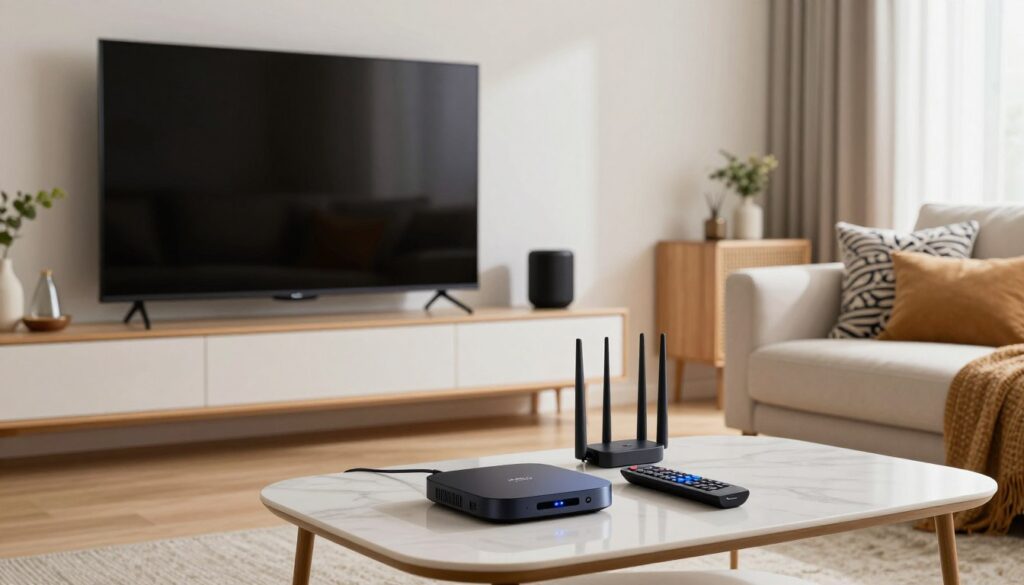
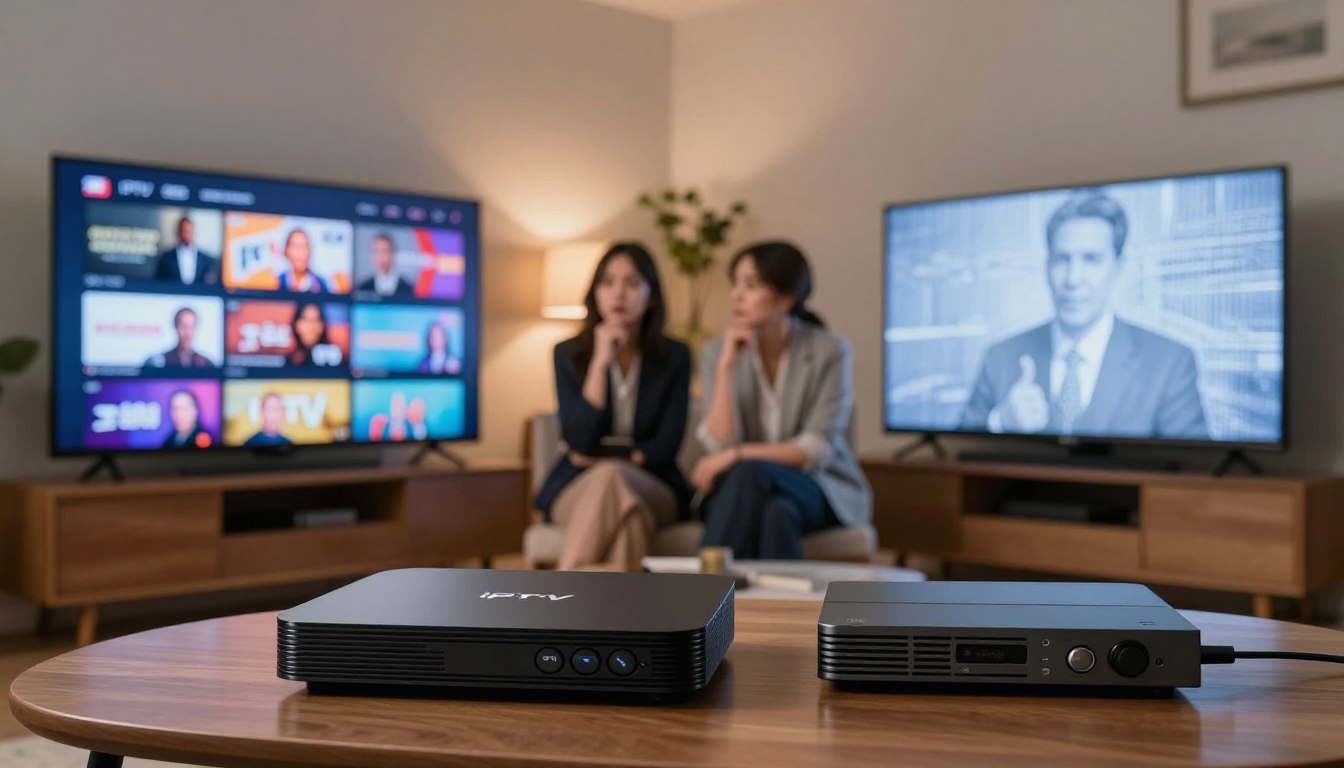
Hardware Needs for IPTV Streaming Devices
IPTV services need special devices to work well. Devices like the Apple TV 4K, Roku Ultra, or Amazon Fire TV Cube are great. They have the power for smooth playback.
Choose devices with robust internal processors and enough RAM. This ensures fast loading of guides and quick channel changes. Also, keep your device’s software up to date for the latest streaming tech.
Cable Modem and Set-Top Box Requirements
For cable TV, you need a strong modem and set-top box. A high-speed modem, like the latest DOCSIS, keeps your connection stable. It’s the key to getting your TV shows without breaks.
The set-top box is your main TV interface. It’s made to handle broadcast signals and on-demand content. Make sure your coaxial cables are in good shape to avoid signal problems.
Security and Legal Considerations for IPTV
It’s key to know the difference between safe and unsafe IPTV services. As online entertainment grows, keeping your viewing safe and legal is important. This helps avoid trouble.
Distinguishing Authorized Services from Unauthorized Streams
Legal streaming services have deals with content makers and networks. They offer reliable, high-quality streams and make sure creators get paid. But, illegal streams skip these rules, risking service shutdowns or legal trouble for users.
The iptvwar between big media and pirates shows the risks of using unauthorized services. Look for official logos, secure payment, and clear terms to check if a service is legit. If it seems too cheap, it might not be legal.
Data Privacy and Network Security Best Practices
Keeping your personal info safe is as critical as picking the right streaming service. Always use a secure, private network connection to guard against hackers. Don’t stream on public Wi-Fi, as it’s easy to intercept.
Strong security is essential in the iptvwar for digital privacy. A good VPN adds encryption, keeping your viewing history private. Also, update your streaming devices regularly to avoid security issues and malware.
Customization and Flexibility for Households
Today, viewers want more than just static channel lineups. They seek a service that changes with their schedules. Modern entertainment platforms give families the power to adjust their viewing experience easily. Knowing the differences between cable vs iptv pricing helps households save money on entertainment.
Scaling Services Based on Seasonal Viewing Habits
Households watch TV differently throughout the year. In winter, they might watch more movies or sports. But in summer, they watch less. The best IPTV service lets users change their subscriptions easily.
This flexibility means users only pay for what they watch. Unlike traditional services, digital-first options let users change plans anytime. Making smart changes can save a lot of money each year.
Managing Multiple Profiles and Parental Controls
Modern viewing experiences are all about personalization. Most platforms let users create multiple profiles. Each profile shows what each family member likes, making it easy to find something to watch.
Also, good services have strong parental controls. Parents can block mature content or set time limits. This keeps the viewing experience safe and controlled.
| Feature | Traditional Cable | Modern IPTV |
|---|---|---|
| Subscription Flexibility | Low (Contract-based) | High (Month-to-month) |
| Profile Customization | Limited | Advanced |
| Parental Controls | Basic | Comprehensive |
| Seasonal Scaling | Difficult | Seamless |
Future Trends in Home Entertainment Technology
The world of home entertainment is changing fast. New tech is making it easier for us to enjoy our favorite shows and movies. Soon, finding what to watch will be a breeze, thanks to advanced systems.
The Integration of AI in Content Discovery
Artificial intelligence is now key in finding what to watch. It looks at what you like and suggests shows that fit your taste. This means no more endless searching through lots of options.
Soon, your TV will guess what you want to watch before you even look for it. This smart feature is a big plus for the top iptv services out there. As these systems get to know you better, watching your favorite shows will feel more natural.
The Transition Toward Fiber-Optic Delivery Systems
How we get TV is changing too. Fiber-optic networks are coming, bringing fast speeds and clear pictures. This means you can enjoy 8K streaming and live shows without any lag.
Switching to fiber-optic means fewer breaks in your viewing. You’ll also get your shows faster. As more homes get connected, the top iptv services will offer even better quality to more people in the U.S.
Conclusion
Today, viewers have many choices with digital delivery instead of old systems. It’s important to think about what you watch, how much you spend, and what you need technically. You must decide if you want the freedom of on-demand or the reliability of traditional systems.
If you’re looking to switch, you should compare cable and IPTV. Try different services with their free trials. This way, you can see how the streams look and how easy it is to use them.
Finding the right service in 2026 means matching what you need with what’s available. Whether you love live sports or have a big collection of shows, there’s something for everyone. By doing your homework, you can find a service that will keep you entertained for years.