You’re looking for the perfect IPTV streaming solution. It all begins with the right device. An IPTV encoder box is key for delivering top-notch content to your viewers. https://iptvwar.com/
With many choices out there, picking the best IPTV streaming device can feel daunting. You need a device that meets your streaming needs, offering a smooth viewing experience.
Choosing the ultimate IPTV encoder box ensures high-quality content delivery. This meets your viewers’ high expectations.
Key Takeaways
- Understand the importance of IPTV encoder boxes in modern streaming.
- Learn how to choose the right IPTV streaming device for your needs.
- Discover the key features to look for in an IPTV encoder box.
- Find out how to ensure high-quality content delivery.
- Explore the benefits of using the ultimate IPTV encoder box.
What Is an IPTV Encoder Box and Why Do You Need One?
An IPTV encoder box is key for streaming content clearly. It turns video and audio into digital formats for the internet. This makes your streams look great.
The Core Functions of IPTV Encoders
IPTV encoders do a lot to ensure your streams are top-notch. They compress and encode video and audio into digital formats. This makes them work with different streaming methods.
They also encrypt the content to keep it safe from unauthorized access. This is important for protecting your streams.
How Video Encoding Transforms Content for Streaming
Video encoding is crucial for streaming. It makes video files smaller, so they’re easier to send online. This doesn’t hurt the quality of the video.
By converting raw video data into a compressed format, it’s ready for smooth streaming. The quality of the encoder greatly affects the final stream. Professional encoders offer the best results.
The Evolution of IPTV Encoding Technology
IPTV encoding technology has changed the broadcasting world. Modern IPTV encoders have made a big impact. They’ve changed how we make, share, and watch content.
From Standard Definition to 4K: A Technical Journey
The move from standard definition to 4K was a big step. IPTV encoder boxes had to keep up with new quality demands. They needed better compression, more power, and new designs.
Now, IPTV encoders can handle many resolutions and frame rates. This means your content looks its best.
Modern Capabilities of IPTV Encoding Systems
Today’s IPTV encoding systems have cool features. They support many codecs, stream adaptively, and protect content well. High-quality IPTV encoders can also handle different sources. This lets you offer a variety of content.
Knowing what IPTV encoding systems can do helps you choose the right one. It ensures your viewers have the best experience.
Key Benefits of Using an IPTV Encoder Box
The IPTV encoder box brings many benefits to your streaming. It offers a strong solution for encoding content. This means you can send high-quality streams to your viewers.
Content Flexibility and Distribution Control
An IPTV encoder box gives you control over your content. You can manage many streams and adjust settings easily. This is key for meeting viewer needs and preferences.
Cost-Effectiveness Compared to Traditional Broadcasting
Choosing an affordable IPTV encoder saves money. It uses IP-based streaming, cutting down on the need for expensive broadcast setups. This makes it a great choice for both new and established services.
Enhanced Viewing Experience for Your Audience
An IPTV video encoder box improves the viewing experience. It offers top-notch video and audio. You can make sure your content looks great on all devices, giving your viewers a better experience.
Essential Features of a High-Quality IPTV Encoder Box
To get the best out of your IPTV streaming, knowing what makes a top IPTV encoder box is key. A high-quality encoder is crucial for any IPTV streaming setup. It handles video and audio processing to get your content to viewers smoothly.
Video Resolution and Compression Standards
The video resolution and compression standards are key for stream quality. Modern encoders should support many compression standards. This ensures your streams work well on different devices and platforms.
H.264 vs. H.265/HEVC Encoding
The choice between H.264 and H.265/HEVC for video compression matters a lot. H.265/HEVC is better at compressing video. It lets you stream high-definition and 4K content at lower bitrates.
Resolution Support from SD to 4K
A good IPTV encoder box should handle resolutions from SD to 4K and more. This flexibility means you can stream content to any device, no matter its resolution.
Input/Output Options and Connectivity
The input/output options and connectivity of an IPTV encoder box are crucial. Look for devices with HDMI, SDI, and audio inputs. Also, check for strong output capabilities like IP streaming and network connectivity.
Network Protocol Support and Streaming Capabilities
Your IPTV encoder box should support various network protocols like UDP, RTP, and RTSP. It should also handle multiple streams at once. This ensures smooth streaming to different platforms and devices.
Types of IPTV Encoder Boxes for Different Applications
Choosing the right IPTV encoder box is key. There are many types, each suited for different needs. From small streaming setups to big broadcasting operations, there’s a box for everyone.
Hardware vs. Software-Based Encoding Solutions
IPTV encoder boxes come in two main types: hardware and software. Hardware encoders are special devices for top-notch encoding. They’re perfect for professional broadcasting. Software encoders, running on regular computers, offer flexibility and can grow with your needs.
Hardware encoders are reliable and consistent, great for critical tasks. Software encoders are easier to update and customize, without needing new hardware.
Single-Channel vs. Multi-Channel Encoder Systems
Another key difference is between single-channel and multi-channel encoders. Single-channel encoders handle one stream at a time, ideal for small or specific needs. Multi-channel encoders can manage many streams at once, better for big broadcasting.
Multi-channel encoders are great for providers needing to encode many streams. For example, they can create streams for different devices or platforms, ensuring a smooth viewing experience.
Professional vs. Prosumer Encoder Options
IPTV encoder boxes also vary by user level. Professional encoders are for high-end broadcasting, with advanced features and quality. Prosumer encoders are for enthusiasts or small operators, offering good quality at a lower cost.
Professional encoders support more inputs, advanced compression, and robust protocols. Prosumer encoders balance quality and price, reaching more users.
| Type | Description | Key Features |
|---|---|---|
| Hardware-Based | Dedicated hardware for encoding | High performance, reliability |
| Software-Based | Encoding software on standard hardware | Flexibility, scalability |
| Single-Channel | Encodes one video stream | Simple, cost-effective |
| Multi-Channel | Encodes multiple video streams | High efficiency, versatile |
| Professional | High-end broadcasting applications | Advanced features, high quality |
| Prosumer | For enthusiasts and small-scale operators | Balanced quality and affordability |
Knowing about these IPTV encoder box types helps you choose the right one. Whether you’re a pro broadcaster or a prosumer, there’s a box that fits your needs.
Understanding Technical Specifications of IPTV Encoder Boxes
Choosing the right IPTV encoder box is key for top-notch streams. The right specs can greatly improve your IPTV content’s performance and quality.
Video Codecs and Format Compatibility
Video codecs compress and decompress video content. H.264 and H.265 are top choices for IPTV encoder boxes. The codec you pick impacts your stream’s quality and compatibility. Make sure your box supports various codecs for flexibility.
Bitrate Settings and Their Impact on Quality
Bitrate settings control how much data is used for each second of video. A higher bitrate means better quality, but it uses more bandwidth. Finding the perfect balance between bitrate and quality is vital for great streaming.
Latency Considerations for Live Streaming
Latency is the delay between a live event and when viewers see it. Low latency is key for live streaming to offer a real-time experience. IPTV encoder boxes with adjustable latency can help improve this.
Knowing these technical specs helps pick the best IPTV encoder box for your needs. Whether you’re a content creator or a broadcaster, the right box can boost your streaming quality.
Top IPTV Encoder Box Brands in the American Market
In the American market, IPTV encoder box brands vary a lot. They differ in features, price, and who they’re for. This variety lets consumers pick what’s best for them.
Enterprise-Level Solutions from Leading Manufacturers
For big operations, top brands have high-end IPTV encoder boxes. They come with advanced features.
Haivision Makito X Series
The Haivision Makito X Series is top for professionals. It encodes and streams video well. It supports up to 4K resolution and has strong security.
Wowza ClearCaster
Wowza ClearCaster is great for live streaming. It has robust encoding capabilities and streams in real-time. It’s easy to use and reliable.
VITEC MGW Encoders
VITEC MGW Encoders are versatile. They have advanced contribution and distribution capabilities. They fit many broadcasting needs.
Budget-Friendly Options for Small-Scale Operations
Not every operation needs top-notch encoding. Many brands offer affordable IPTV encoder boxes. They’re perfect for smaller operations or newbies.
Teradek Vidiu
The Teradek Vidiu balances quality and cost. It offers reliable encoding and streaming.
Kiloview Encoders
Kiloview Encoders are flexible. They’re compatible with various streaming platforms. They’re good for streaming on different networks.
AJA HELO
The AJA HELO is small but powerful. It streams high-quality video. It’s great for live events and corporate streaming.
| Brand | Model | Key Features |
|---|---|---|
| Haivision | Makito X Series | 4K resolution, advanced security |
| Wowza | ClearCaster | Robust encoding, real-time streaming |
| VITEC | MGW Encoders | Advanced contribution and distribution |
| Teradek | Vidiu | Reliable encoding and streaming |
| Kiloview | Encoders | Flexible, compatible with various platforms |
| AJA | HELO | High-quality streaming, compact |
Choosing an IPTV encoder box depends on your needs. Whether you’re big or small, there’s a solution for you. The brands mentioned offer a variety of options.
How to Choose the Right IPTV Encoder Box for Your Specific Needs
To pick the right IPTV encoder box, think about a few key things. These things should match what you need to distribute your content. The right box can make your streams better and more efficient.
Assessing Your Content Type and Distribution Requirements
First, figure out what kind of content you’re streaming. Are you showing live events, movies, or TV shows? Each type might need different settings.
For example, live events need low latency for smooth streaming. But movies can have a bit more latency for better quality. Also, think about the resolution and quality of your content.
Scalability and Future-Proofing Your Investment
Think about how your needs might change in the future. Will your current encoder box keep up? Look for boxes that can grow with you or have easy upgrades.
This way, your investment will stay useful as your needs change or technology improves.
Budget Planning and Total Cost of Ownership
Don’t forget about your budget. Think about the total cost, including the initial price, upkeep, and any future upgrades. Compare different models and brands to find the best deal.
| Feature | Basic IPTV Encoder | Advanced IPTV Encoder |
|---|---|---|
| Video Resolution | Up to 1080p | Up to 4K |
| Scalability | Limited | Highly Scalable |
| Cost | Lower | Higher |
By looking at your content, scalability, and budget, you can choose the right IPTV encoder box. It should meet your specific needs.
Setting Up Your IPTV Encoder Box: A Comprehensive Guide
Setting up your IPTV encoder box is easy but needs focus. Knowing the main parts is key for a smooth setup.
Physical Installation and Connection Process
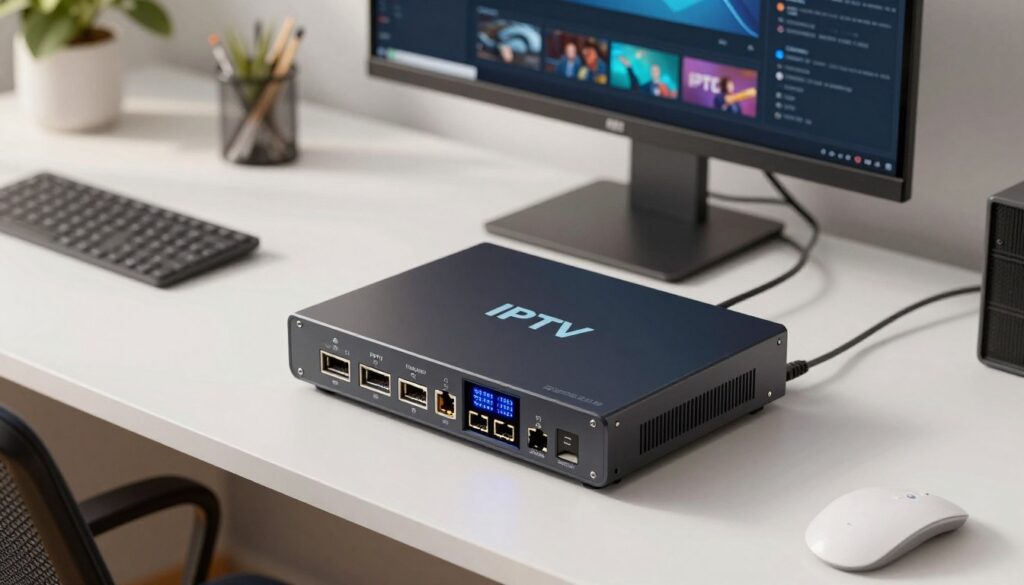
Start by installing your IPTV encoder box. Plug it into a power source and make sure it has good airflow to avoid overheating. Then, connect your video and audio sources to the right ports on the box. This could be HDMI, SDI, or other connections based on your gear.
Make sure all cables are tight to avoid signal problems or other issues. If your encoder is rack-mounted, secure it well to prevent damage from movement or vibration.
Software Configuration and Stream Settings
After setting up the physical parts, it’s time to tweak the software. Log into the device’s web interface or control panel to adjust the stream settings. You’ll need to set the video resolution, bitrate, and frame rate based on your needs.
Match your stream settings to your internet speed and the platform’s capabilities. For example, streaming in 4K requires a much higher bitrate than standard definition. Check your encoder’s manual for help with these settings.
“The quality of your stream is directly related to the configuration of your encoder. Take the time to get it right.”
Testing and Validating Your Setup
After setting up your IPTV encoder box, test and check your setup. First, preview your stream to see if the video and audio are encoded right. Look for any distortion, lag, or other issues that could ruin the viewing experience.
Use stream monitoring software to check your stream’s quality and performance. These tools can show you the bitrate, latency, and other important metrics. They help you fine-tune your setup for the best results.
By following these steps, you can set up your IPTV encoder box right. This way, you can deliver top-notch streams to your viewers.
Optimizing Your IPTV Encoder Box Performance
To get the best out of IPTV streaming, you need to optimize your encoder box. A well-optimized encoder ensures your content is top-notch. This meets your viewers’ high expectations.
Bandwidth Management and Quality Optimization
Managing bandwidth well is key for quality IPTV streams. Giving your encoder box enough bandwidth stops buffering. Top IPTV encoders have features for adjusting bandwidth in real-time.
Finding the Perfect Balance Between Quality and Performance
Finding the right balance between video quality and encoder performance is crucial. High-quality settings can be tough on your encoder. But, low quality can upset your viewers. High-quality IPTV encoders aim to find this balance, giving you the best output without overloading.
Monitoring Tools and Performance Analytics
It’s important to keep an eye on your IPTV encoder box’s performance. Using monitoring tools and analytics helps spot problems early. This keeps your IPTV encoder box running smoothly, ensuring quality delivery.
| Optimization Technique | Description | Benefit |
|---|---|---|
| Bandwidth Management | Allocating sufficient bandwidth for IPTV streams | Prevents buffering, ensures smooth streaming |
| Quality Optimization | Adjusting video quality settings for optimal performance | Balances quality and system performance |
| Performance Monitoring | Using analytics to monitor encoder box performance | Identifies issues before they become critical |
Common IPTV Encoder Box Issues and Troubleshooting Solutions
Understanding and fixing common problems with IPTV encoder boxes is key for a smooth streaming experience. These devices are powerful but can face technical issues that affect their performance.
Video Quality and Encoding Problems
Video quality and encoding issues are common with IPTV encoder boxes. If your stream has buffering, pixelation, or visual distortions, it might be due to wrong encoding settings or video formats. Make sure your encoder is set to the right resolution and bitrate for your content to fix these problems. Also, check that your source material is of high quality to avoid encoding issues.
Network Connectivity and Streaming Issues
Network connectivity is another problem area for IPTV encoder boxes. Stable internet is key for uninterrupted streaming. If you see stuttering or disconnections, check your network setup and ensure your encoder box is set up right for your network. Using a wired connection instead of Wi-Fi can also help with stability.
System Stability and Hardware Failures
System crashes or hardware failures can also hit IPTV encoder boxes. Regularly update your encoder’s firmware and watch its temperature to avoid overheating and system instability. If there’s a hardware failure, having a backup plan or redundant systems can help reduce downtime.
| Issue | Common Cause | Troubleshooting Step |
|---|---|---|
| Video Distortion | Incompatible encoding settings | Adjust encoder settings to match content requirements |
| Streaming Interruptions | Unstable network connection | Check network infrastructure and consider a wired connection |
| System Crashes | Outdated firmware or overheating | Update firmware and ensure proper cooling |
Integrating Your IPTV Encoder Box with Existing Systems
Setting up your IPTV encoder box right is key. It must work well with your current systems. This ensures your streaming runs smoothly and your viewers get the best experience.
Content Management System Integration
Connecting your IPTV encoder box to your Content Management System (CMS) makes things easier. You can:
- Manage your video library well
- Plan broadcasts easily
- Check how your content is doing
Linking your IPTV encoder box to your CMS automates tasks. This cuts down on mistakes and saves you time. It’s important for a reliable streaming service.
Distribution Network and CDN Compatibility
It’s crucial that your IPTV encoder box works with your distribution network and Content Delivery Network (CDN). You need to:
- Set up your encoder for your CDN
- Adjust stream settings for different networks
- Keep an eye on CDN performance
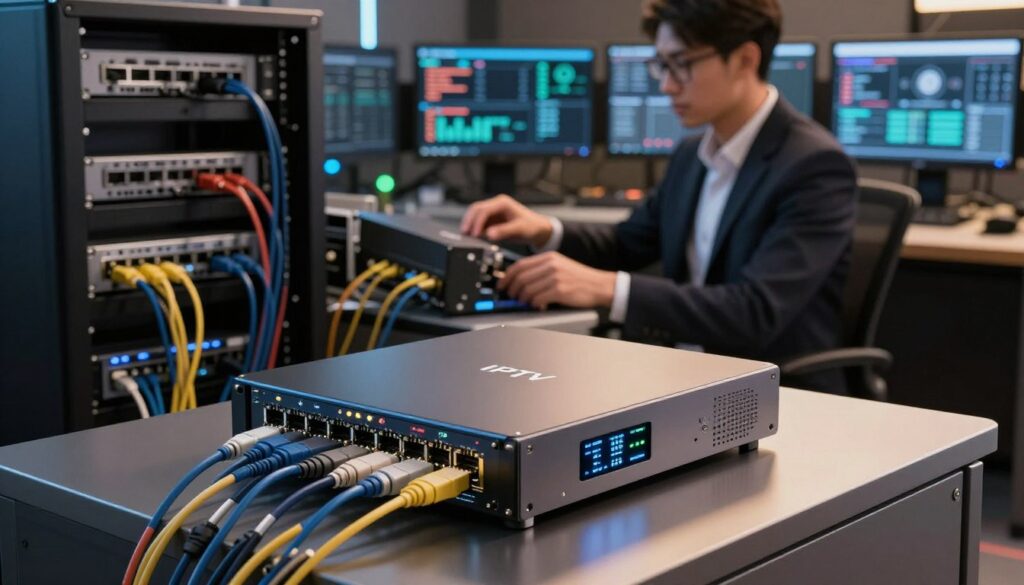
Getting your IPTV encoder box to work with your distribution network is vital. It makes sure content gets to your audience without a hitch. This leads to a better viewing experience for everyone.
Legal and Compliance Considerations for IPTV Encoder Box Usage
It’s important to know the law when using an IPTV encoder box for sharing content. As you explore IPTV streaming, following U.S. rules is key to stay out of trouble.
Copyright and Content Rights in the United States
When you use an IPTV encoder box, make sure you have the right to share the content. You need to know about copyright laws and get the right licenses. Not doing so can lead to big fines.
| Copyright Aspect | Description | Compliance Requirement |
|---|---|---|
| Content Ownership | Ensuring you have the rights to stream content | Obtain necessary licenses |
| Copyright Infringement | Avoiding unauthorized use of copyrighted material | Use royalty-free or licensed content |
| Digital Millennium Copyright Act (DMCA) | Compliance with DMCA regulations | Implement takedown procedures for copyright infringement claims |
Broadcast Standards and Regulatory Compliance
You also need to follow broadcast standards and rules. This means sticking to technical broadcasting rules and making sure your IPTV video encoder box meets these standards.
Groups like the Federal Communications Commission (FCC) have rules you must follow. It’s crucial to make sure your professional video encoders follow these rules to keep your operation legal.
Future Trends in IPTV Encoder Box Technology
IPTV encoder boxes are getting smarter, thanks to AI and cloud tech. This change will make encoding and sharing content better and faster. It promises to bring a new level of quality and efficiency.
AI-Enhanced Encoding and Optimization
Artificial Intelligence (AI) is making IPTV encoder boxes smarter. AI can tweak encoding on the fly for top-notch quality. It adjusts bitrate based on your internet speed for a smooth watch.
AI also spots and fixes problems before they happen. This makes the system more reliable and less prone to errors.
Cloud-Based and Virtual Encoding Solutions
Cloud and virtual encoding are big now. They make it easy to grow without buying lots of hardware. This flexibility is a big win for providers.
| Feature | Traditional Encoding | Cloud-Based Encoding |
|---|---|---|
| Scalability | Limited | Highly Scalable |
| Cost | High Initial Investment | Pay-As-You-Go Model |
| Maintenance | Requires On-Site Maintenance | Minimal Maintenance Required |
Cloud encoding makes sharing content easier and more efficient. It’s a great choice for modern IPTV services.
Conclusion: Elevating Your Streaming Quality with the Perfect IPTV Encoder Box
An IPTV encoder box is key to delivering top-notch streaming services. By picking the right one, you can greatly improve your viewers’ experience. Look for features like 4K resolution, efficient compression, and strong network support.
When looking for an affordable IPTV encoder, think about what you need. Consider the type of content, how you’ll distribute it, and your budget. This will help you choose wisely and meet your streaming goals now and in the future.
With what you’ve learned, you’re ready to find the perfect IPTV encoder box. It doesn’t matter if you’re small or big. The right encoder will make your streaming quality top-notch. This ensures your viewers have a smooth and enjoyable watching experience.